Because of the internet-connected nature of many digital goods, manufacturers are able to update these goods to put new advertisements into them which were not present at the time of the sale. Apparently, the manufacturers didn’t make enough money from the original sale of a $2,000 TV or a $50,000 car. It is unacceptable for a manufacturer to hold consumers as captive audiences by retroactively changing the product.
Samsung Family Hub refrigerators
Samsung pushed an OTA software update that added advertisements to the refrigerator’s built-in display. The refrigerators had been sold for years before the advertising program began.
BMW Connected vehicles
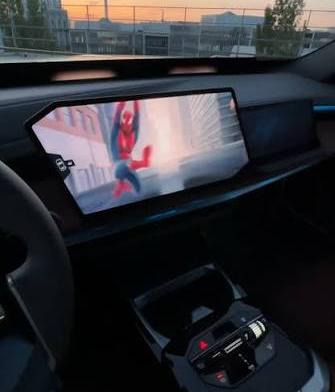
In July 2026, BMW pushed a Spider-Man: Brand New Day promotion to the infotainment displays of existing vehicles, including cars built as far back as 2020. Apparently, BMW didn’t make enough money from the original sale of the car.
Stellantis, Jeep, Ram, Chrysler
Vehicles Connected Uconnect systems began displaying promotional pop-ups, including offers for buying another vehicle and extended-warranty promotions.
Amazon Echo Show
Existing Echo Show smart displays have subsequently acquired increasingly aggressive sponsored/promotional content, including full-screen advertising.
Amazon Fire TVs
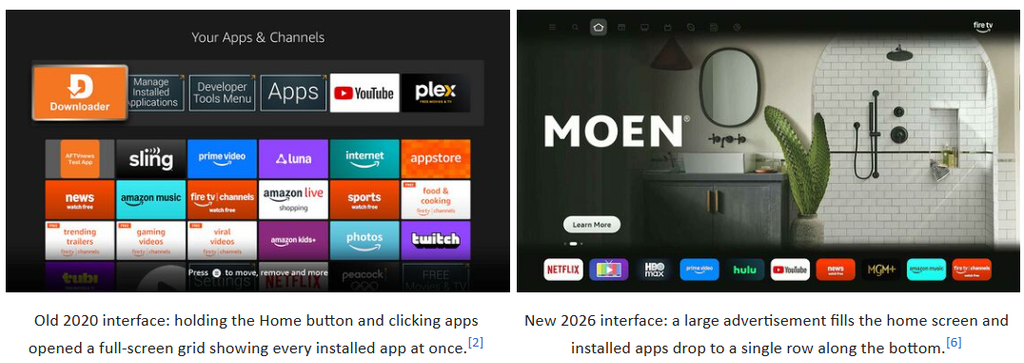
Amazon began rolling out the new Fire TV interface in February 2026. The central change was the removal of the full-screen app grid, so the only place to browse installed apps is a single row on the home screen. Reaching that row from the top navigation menu requires passing through the large home-screen ad banner, which expands to fill nearly the entire screen if the user pauses on it.
Amazon Prime Music, now with ads
On June 2, 2026, Amazon notified Prime members by email that, effective July 2, 2026, the music benefit bundled with a Prime subscription will begin carrying advertisements. To restore ad-free listening, they must subscribe to Amazon Music Unlimited for an additional cost. Amazon told Android Authority the change was specific to India. Amazon did not refund people who paid for the month or for the entire year expecting an ad-free experience.
https://consumerrights.wiki/w/Amazon_Prime_Music_ad_insertion_and_download_removal_(2026)
If I sold you a gallon of ice cream, and then I came into your house, scooped out half of it, and told you that you could get the rest for an additional $2, that would be criminal. So too should this behavior by Amazon.
LG Smart TVs
LG began putting third-party advertising into TV screensavers, including on already-sold televisions. LG explicitly markets the idle screen as advertising inventory.
Hisense Smart TVs
Owners began reporting advertisements during startup, HDMI-input changes, channel changes and other basic TV operations; reports indicate the behavior appeared following software changes. Hisense characterized at least one campaign as a temporary test.
Samsung Smart TVs
Samsung’s smart-TV platform displays advertising on the home screen and elsewhere on televisions consumers have already purchased. Samsung operates a dedicated advertising business around the TV ecosystem.